
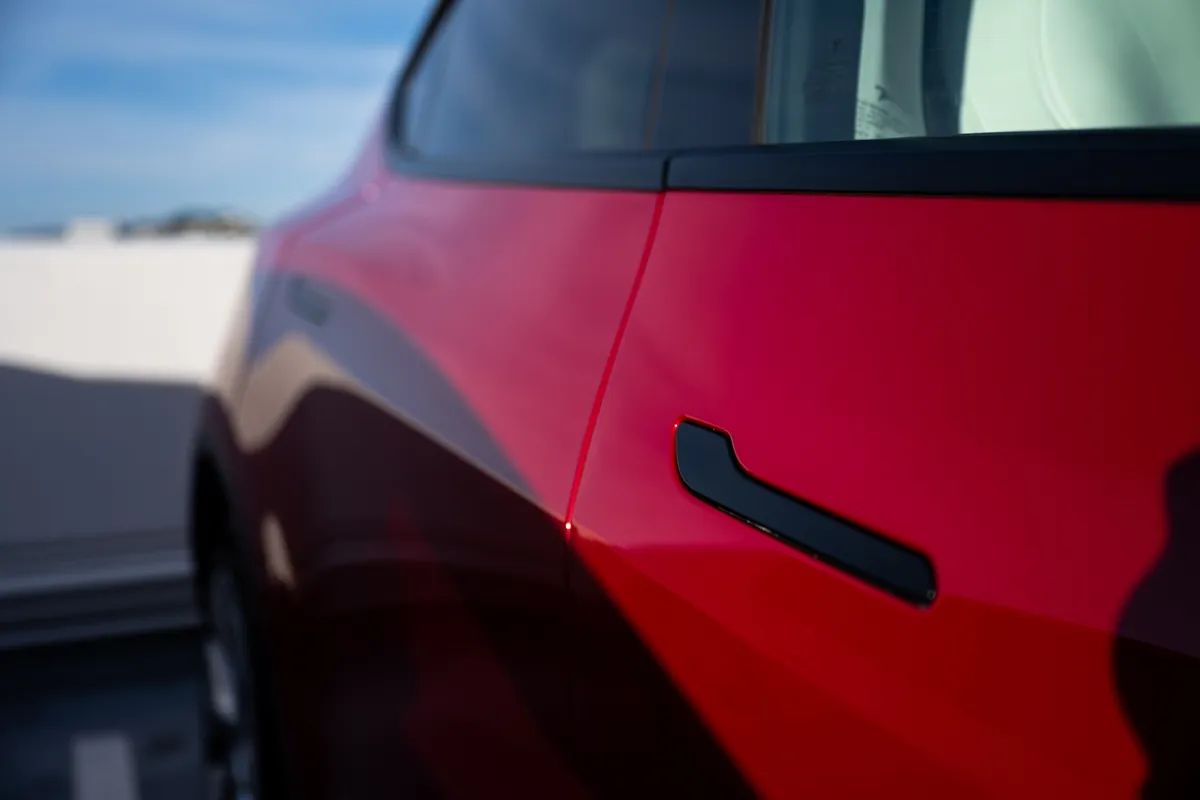
China has put a ban on concealed door handles on EVs, making it the first country, which has been popularised by Tesla, to do so. The ban will go into effect starting at the start of next year, 1 January 2027.
Moving forward, any cars sold in China will now be required to have mechanical release both on the inside and outside, according to new safety rules issued by the country’s Ministry of Industry and Information Technology.
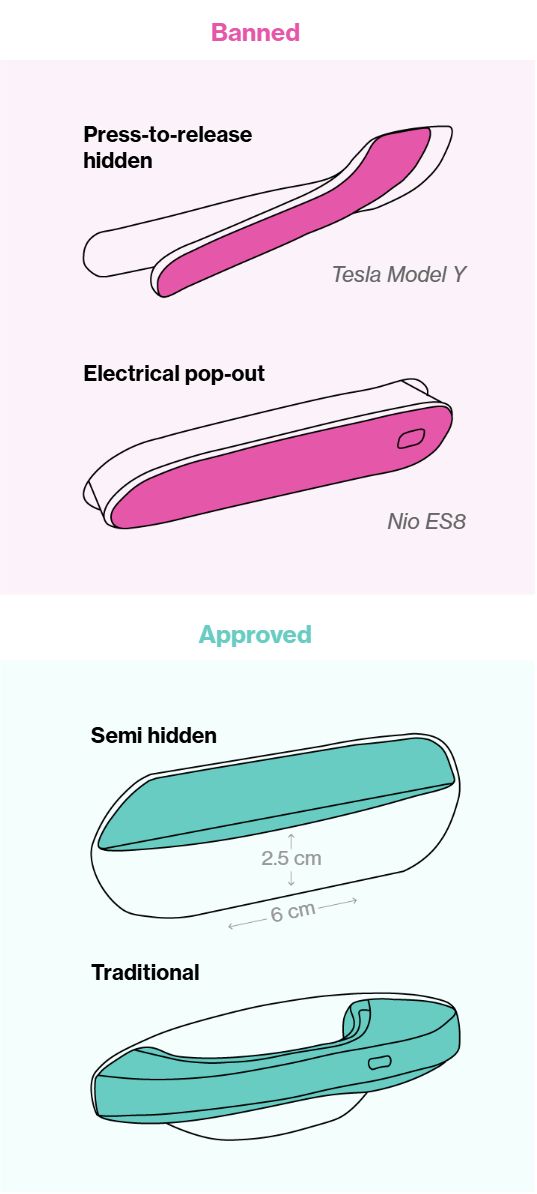
To that end, the Chinese government body has also issued specific dimensions for the new door handles. Specifically, the recessed space in the door must measure 6 x 2.5cm, in order for a hand to be able to grasp the door handle. Additionally, both cars and EVs must have signage no smaller than 1 x 0.7cm to indicate how to open the door.
Why Is This Happening?
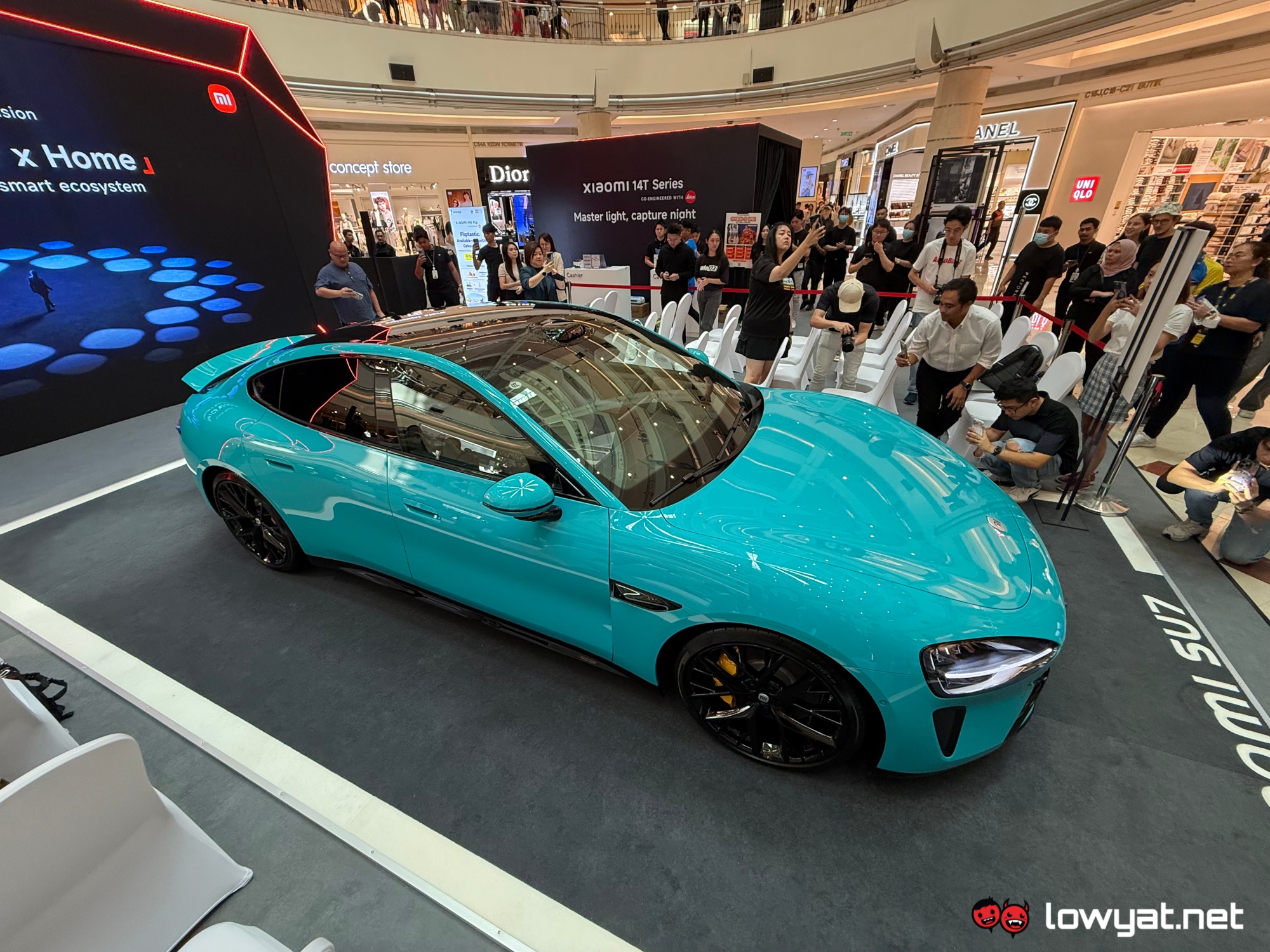
China’s ban on concealed door handles isn’t unfounded, nor is it unreasonable, technically speaking. Since the advent of the EV and its concealed door handles, Xiaomi’s SU7 brought the issue into the spotlight after two fatal crashes – one in March and one in October – left its drivers and passengers unable to open their doors, as well as bystanders without the means to do the same.
“China is shifting from being just the largest EV market to being a rule-setter for how new vehicle technologies are regulated,” Bill Russo, founder of Shanghai-based consultancy Automobility, said. “By moving first, Beijing can use its huge domestic market to lock in safety standards that both Chinese and foreign automakers must follow at home – and that may ultimately travel with Chinese EV exports and influence global norms.”
Basically, China’s new one-size-fits all approach means that no EV maker is spared, which is clearly going to draw the ire of said companies. Even more so, as the country leads the world in EV technology. No, really, just look at our country: BYD, Zeekr (owned by Geely), Chery. These are just some of the major Chinese EV brands that we are currently seeing as the alternative to Tesla’s Model series, and more appropriately, these are the brands that have basically survived China’s extremely competitive market.
How Does This Affect Us?
Considering that China, which remains one of the largest markets for the automotive industry, its ban on cars in its country will undoubtedly cause a ripple effect. Typically, when automobile and EV makers release a new model of their vehicle, it will make different variations of said vehicle, depending on the country it is being sold in.
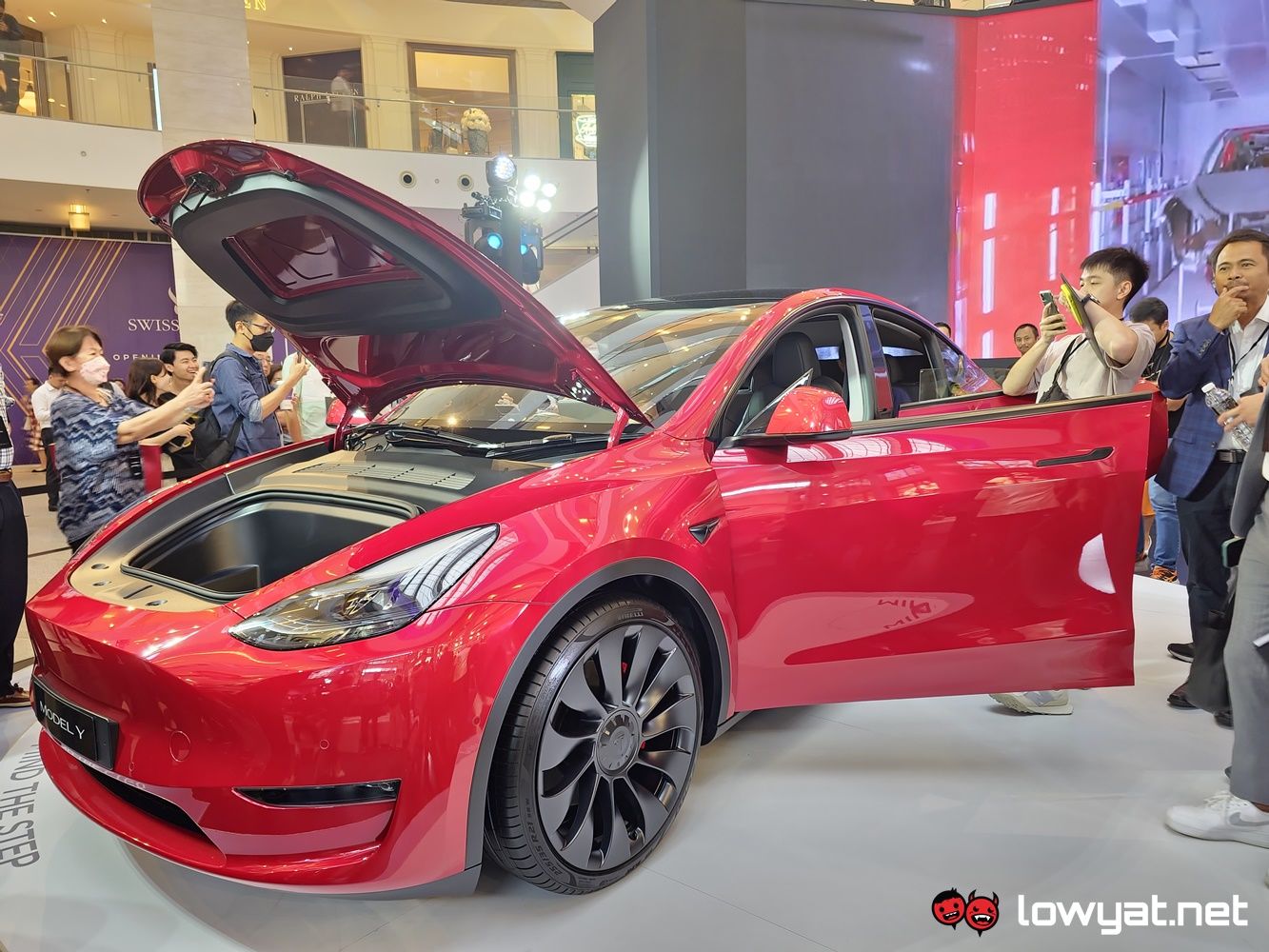
The simple reason is that different countries have different prerequisites, rules and regulations, or even differing consumer tastes. That said, China’s ban on concealed door handles for EVs means that, moving forward, companies like Tesla could just end up adopting uniformity for its EVs, and make traditional door handle designs a standard for all future iterations of its EVs, both in and outside of China.

Of course, having said that, the ban could also end up swinging all the way to the other end of a parabole – with the ban basically being in China only, EV makers could see this as an opportunity to really, and we mean really revise the design of their products. Geely And BYD, having already anticipated the ban, have already reverted to the traditional door handles for their EVs.
In light of the ruling, Tesla has said that it will be making the necessary changes to its vehicles for the Chinese market, as well as make the manual release mechanism more intuitive.
(Source: Bloomberg)
