
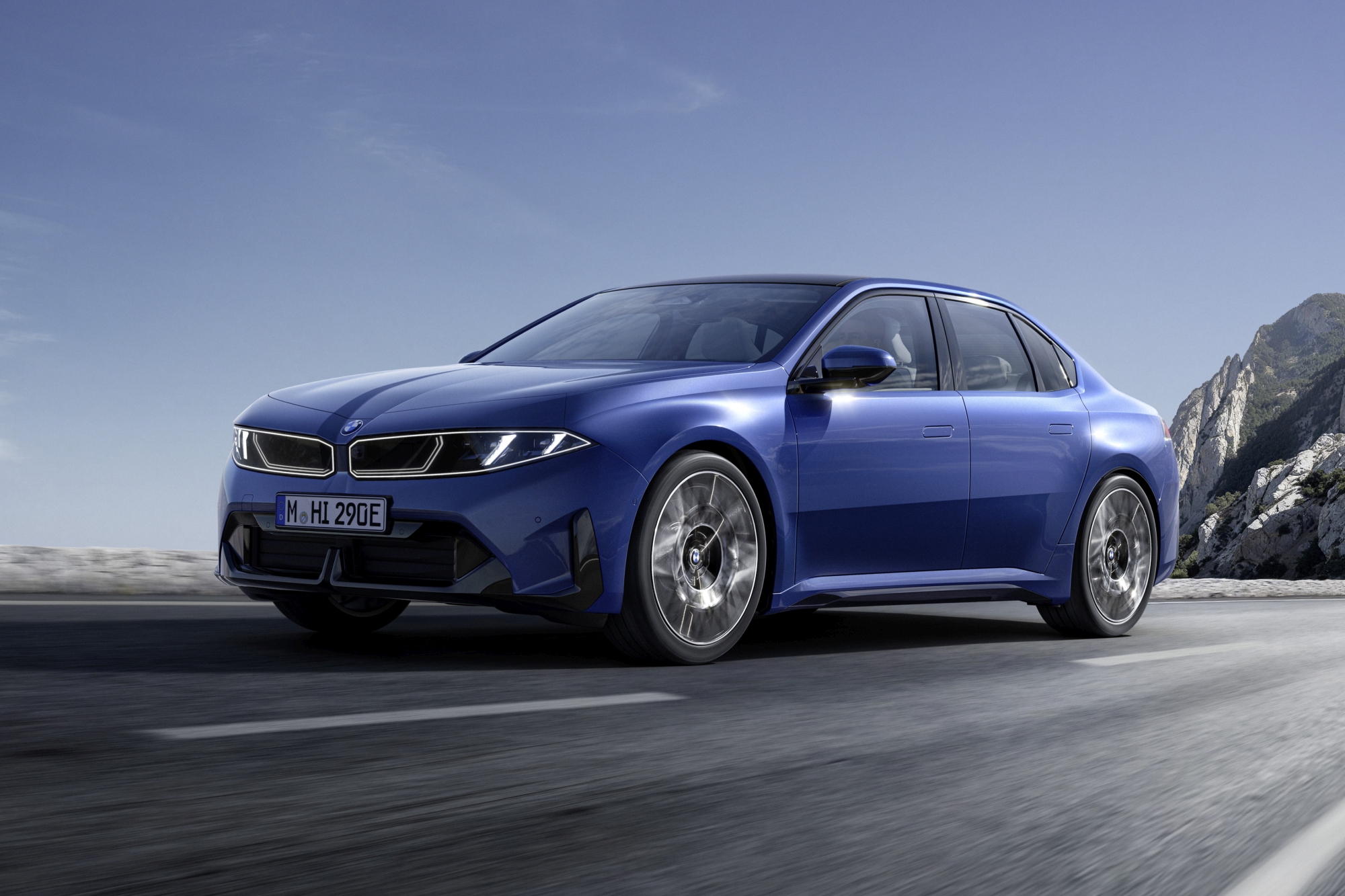
BMW introduced what it called the Neue Klasse (New Class in German) platform last year with the launch of the iX3. More recently, the carmaker has announced the second entry into the list of cars using said platform. It’s the new BMW i3, which is a pretty interesting car for a few reasons. Chief of them being that it looks more like the average 3 Series car than prior models of i3.
For the most part, that’s great from a visual perspective. Though I would argue that it took the the idea BMW had with the i8 a bit too far, and merged the faux grill with the headlamps. This may be a case of function over form, as the look allows for light guides to be built into the faux grilles leading to the quad LED headlights and daylight running lights.
It’s a similar story with the back of the BMW i3. The lights here extend nearly to the middle of the boot, looking almost like the letter L. And while it may now look more like a conventional 3 Series car, it hadn’t escaped the flush pop-out door handles that you see in so many EVs in the market.
BMW did not provide complete performance figures for the i3, but we’ve got something to work with. It features a dual electric motor setup, outputting 345 kW / 469hp and up to 645Nm. The company did not share the battery capacity in the car, but boast a WLTP range of up to 900km. DC charging also goes up to 400W, which gives it 400km with 10 minutes of charging.
Inside, one of the most notable features in here is the way the Panoramic iDrive interface. Part of this is the Panoramic Vision projection, which spans from one A-pillar to the other. This seemingly serves as the instrument cluster and HUD combo. Accompanying it is the infotainment touch screen, which looks to be slightly tilted to face the driver.
For now, the company has not said what sort of price it’s charging for the i3. It hasn’t even begun making it yet, in fact. BMW has scheduled for that to happen in August at its Munich plant. It will then deliver the first cars “from autumn this year”, which starts late September. More than likely this applies to its home market and the rest of its European neighbours first.
