
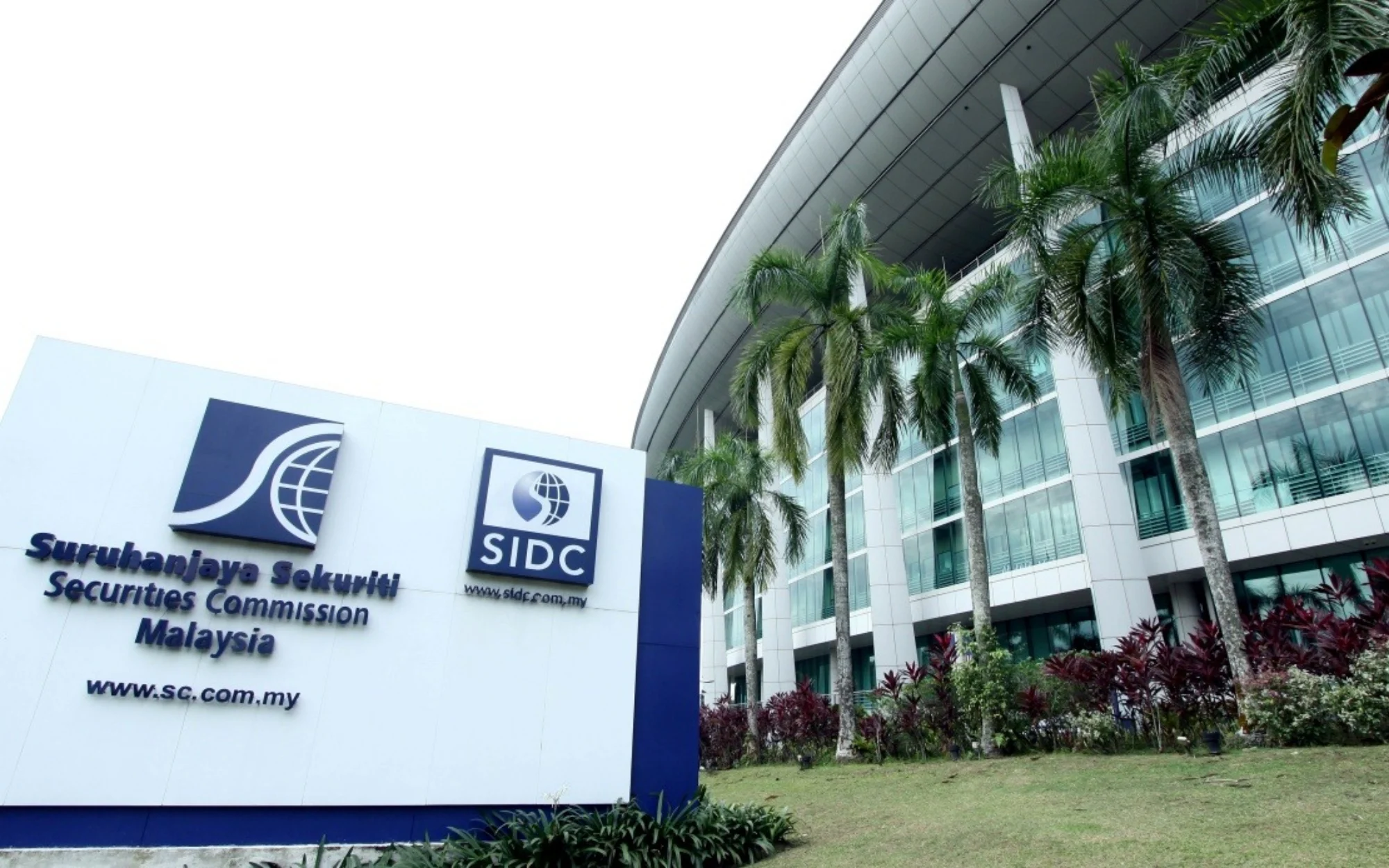
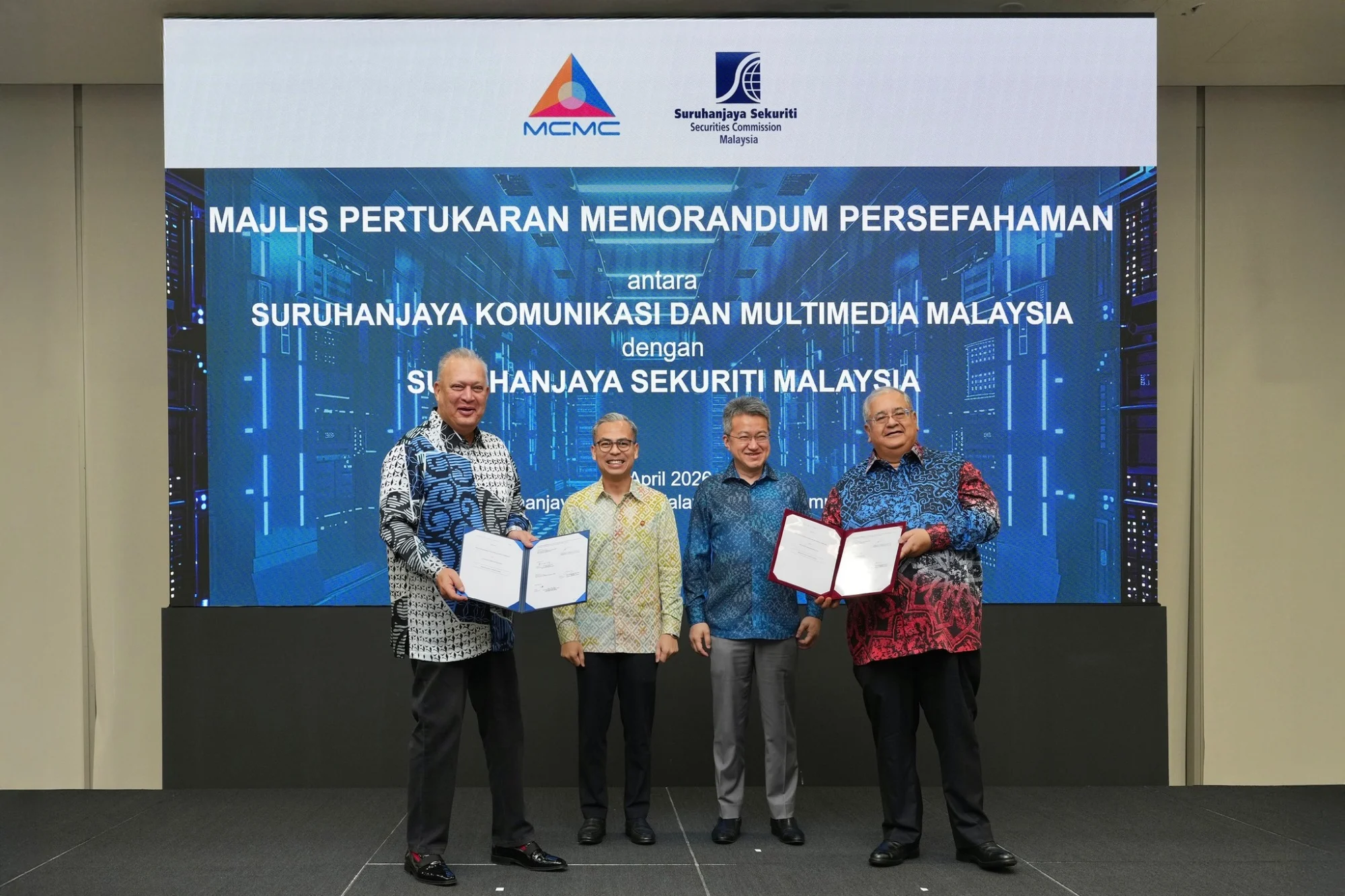
The Securities Commission Malaysia (SC) and the Malaysian Communications and Multimedia Commission (MCMC) today have signed a memorandum of understanding (MoU) to intensify joint efforts against online scams and fraudulent investment schemes. The collaboration is aimed at addressing the increasingly sophisticated digital fraud targeting Malaysians.
The MoU was signed at the SC headquarters by its chairman Mohammad Faiz Azmi and MCMC chairman Mohamad Salim Fateh Din. The signing was witnessed by Communications Minister Datuk Fahmi Fadzil and Deputy Finance Minister Liew Chin Tong.
Tackling Digital Fraud
Both agencies said the partnership will focus on leveraging emerging technologies, including artificial intelligence, to improve detection, investigation, and enforcement capabilities. The collaboration will also involve intelligence sharing, the development of standard operating procedures, and capacity building across enforcement teams.
According to Mohammad Faiz, the MoU represents a significant step towards protecting retail investors and the wider public. He noted that combining the expertise of both agencies would allow for faster responses to emerging threats, while also strengthening safeguards and raising awareness around financial scams.
MCMC echoed this stance, highlighting that coordinated operations are essential as online scams continue to grow in both scale and complexity. The commission added that stronger collaboration would help ensure a safer digital environment for Malaysians.
Building On Existing Cooperation
The newly signed MoU builds on initial cooperation established in March 2025, which enabled faster mitigation measures such as more efficient website blocking and content removal. Over the past two years, both agencies have already blocked or suspended 328 websites, 388 Telegram accounts, and 60 phone numbers linked to fraudulent activities.
This latest agreement also aligns with the expanded role of the National Scam Response Centre, forming part of a wider strategy to maintain public confidence in Malaysia’s digital economy. Additionally, both SC and MCMC plan to ramp up public education efforts. These initiatives will focus on promoting responsible investing, improving financial literacy, and enhancing awareness of digital safety practices.

Rising Scam Cases And Financial Losses
The agreement comes amid persistently high levels of scam activity in Malaysia. Police recorded 1,459 cases of non-existent investment schemes this year alone, involving losses totalling RM188 million. While this marks an 11 percent increase in cases compared to the same period last year, overall losses have shown a slight decline.
Looking at a longer timeframe, 9,296 individuals fell victim to similar scams between January and November last year, with total losses exceeding RM1.37 billion. Individuals aged between 41 and 50 accounted for the highest number of victims, followed closely by those aged between 51 and 60.
Data from the SC further highlights the scale of the issue. The regulator received 3,602 scam-related complaints and enquiries in 2024, with losses surpassing RM1.6 billion. The first half of 2025 alone saw a 23 percent increase in complaints compared to the same period the year before, indicating a continuing upward trend.
In terms of platforms, Telegram accounted for the largest share of complaints at 43% followed by websites at 36%, Facebook and Instagram at 19%, and TikTok at 2%. These figures point to the growing use of digital and social platforms by scammers to reach potential victims.
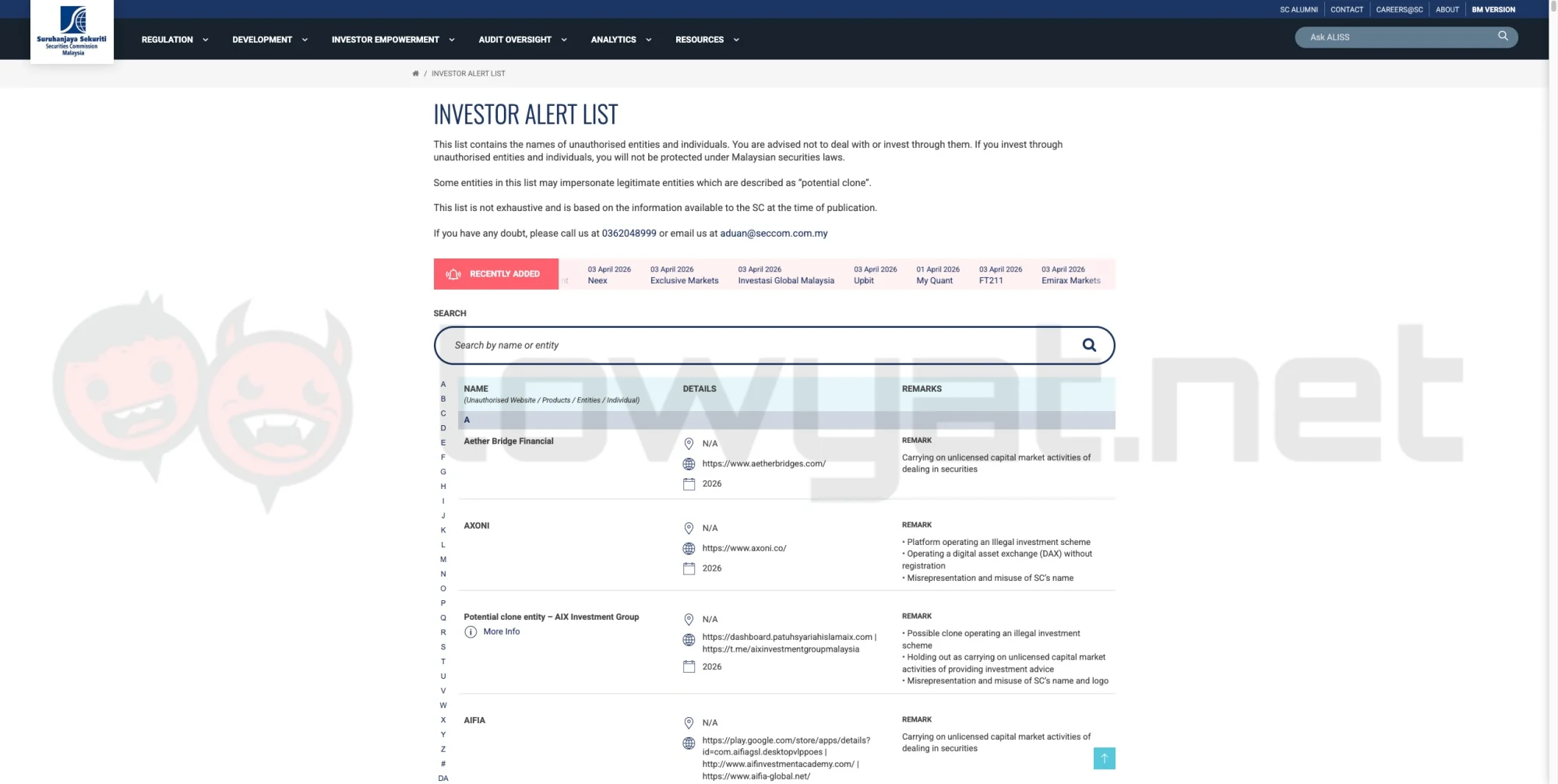
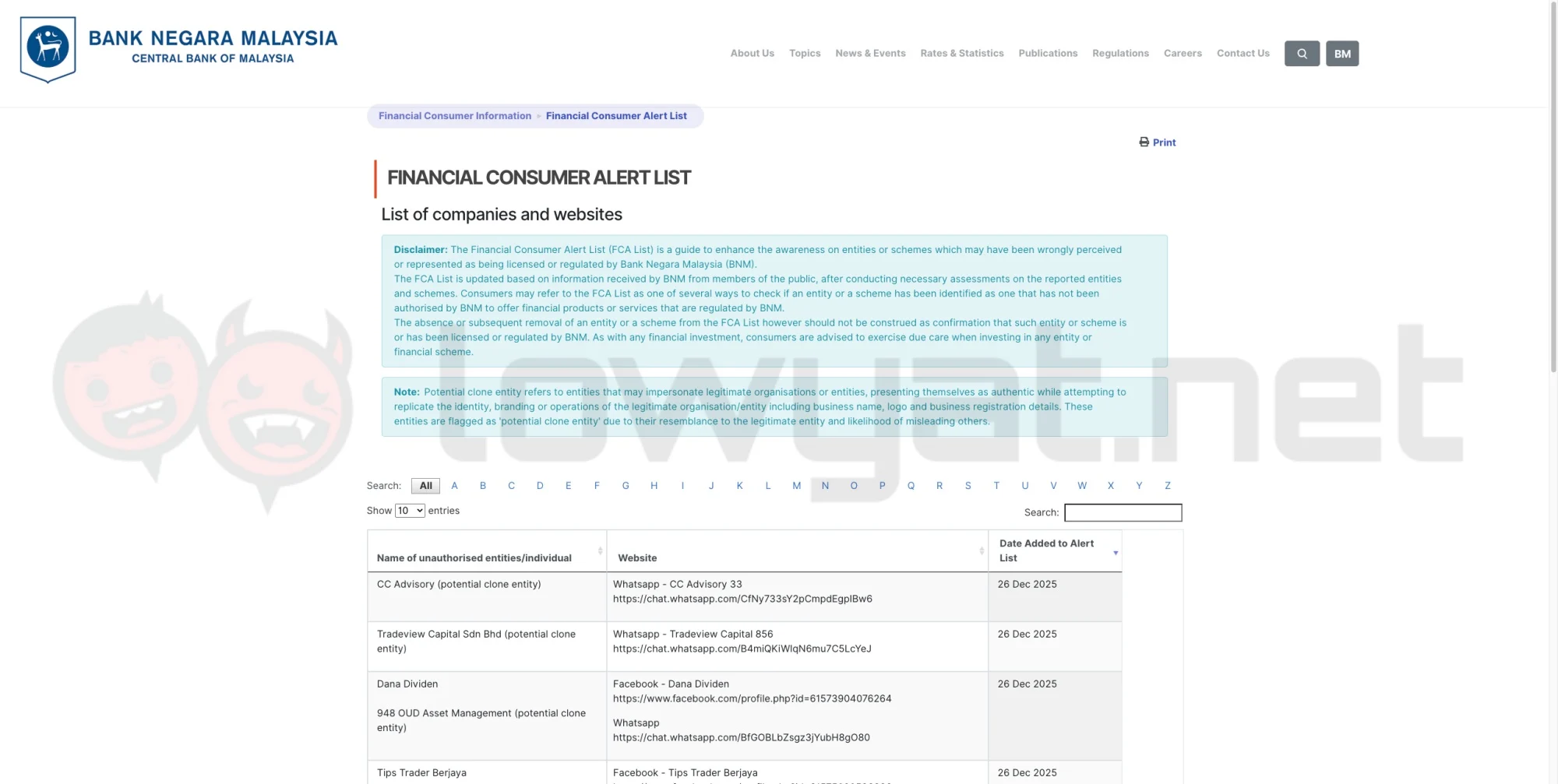
Members of the public are also encouraged to verify investment opportunities through official channels such as the SC Investor Alert List and Bank Negara Malaysia’s Financial Consumer Alert.
(Source: Securities Commission Malaysia [official website] [Facebook])
