

Proton has officially released the full specifications of the upcoming eMAS 7 PHEV, ahead of its launch in Malaysia. Detailed by several publications including Paultan.org, the new model expands the eMAS lineup as a plug-in hybrid variant of Proton’s first electric vehicle, and is being positioned as the country’s first “dual-powered EV” with extended electric-only driving capability. Built on Proton’s Global Modular Architecture (GMA), which was developed from the outset for electrification, the eMAS 7 PHEV will be offered in three variants at launch: Prime, Premium, and Premium Plus.
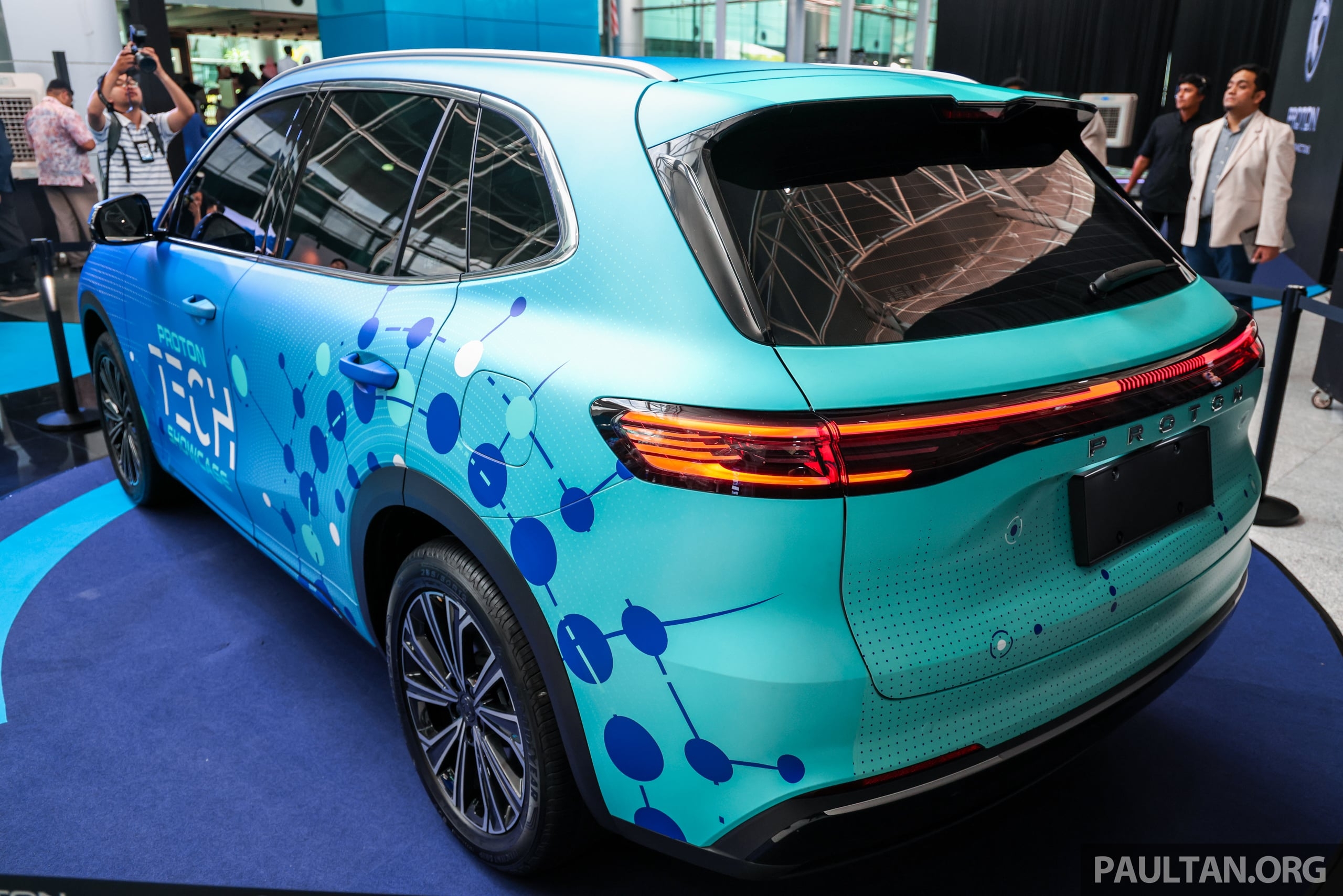
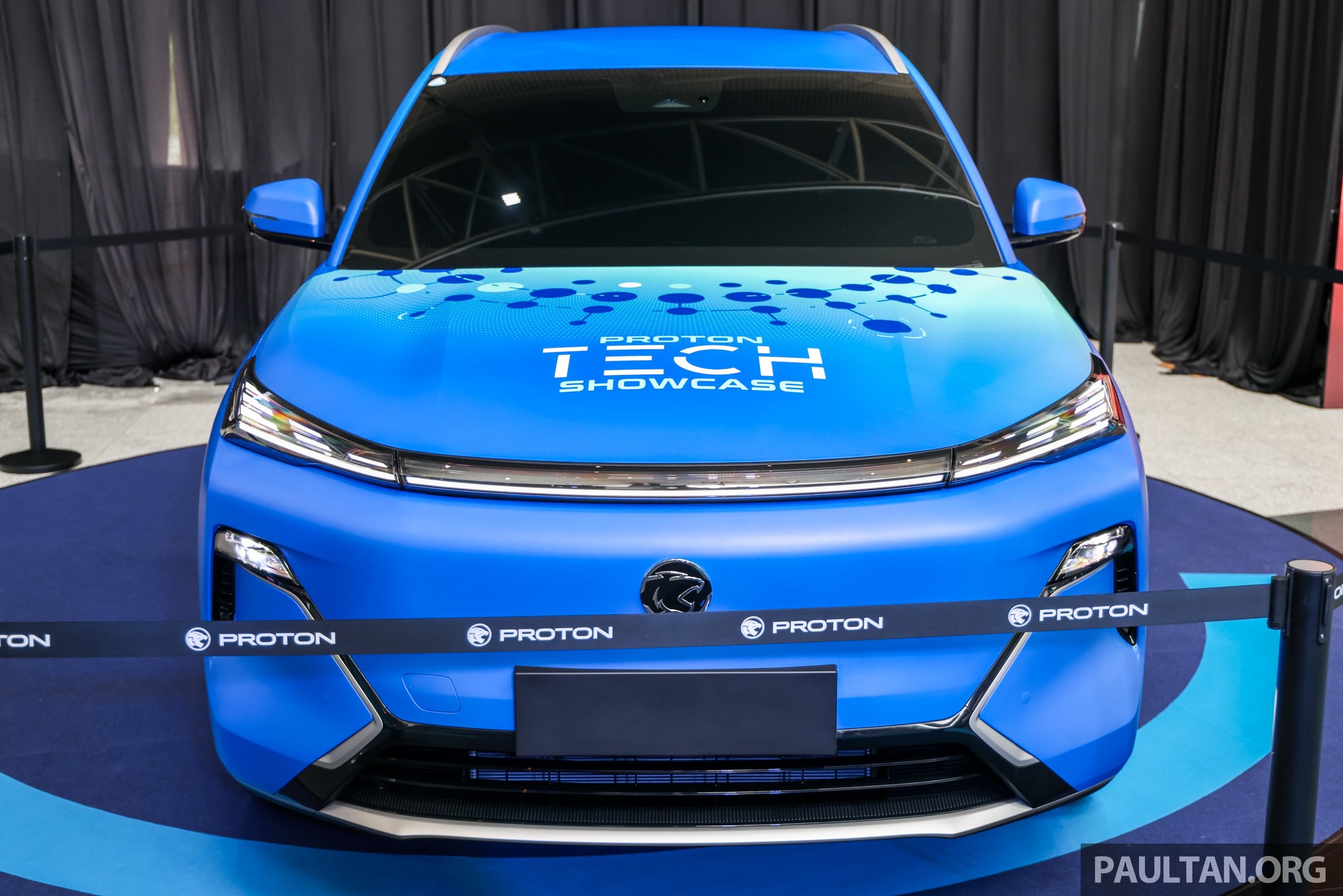
The PHEV retains the overall eMAS styling, but introduces several model-specific changes. These include a split headlight design, revised tail light graphics, unique bumpers, and a redesigned rear hatch that integrates the number plate recess, unlike the EV version which mounts the plate on the bumper. Dimensionally, the eMAS 7 PHEV measures 4,740 mm long, 1,940 mm wide, and 1,685 mm tall, with a 2,755 mm wheelbase. This makes it slightly larger than the fully electric eMAS 7, placing it firmly on the bigger end of the C-segment SUV category. Boot capacity is rated at 528 litres, expanding to 2,065 litres with the rear seats folded down.
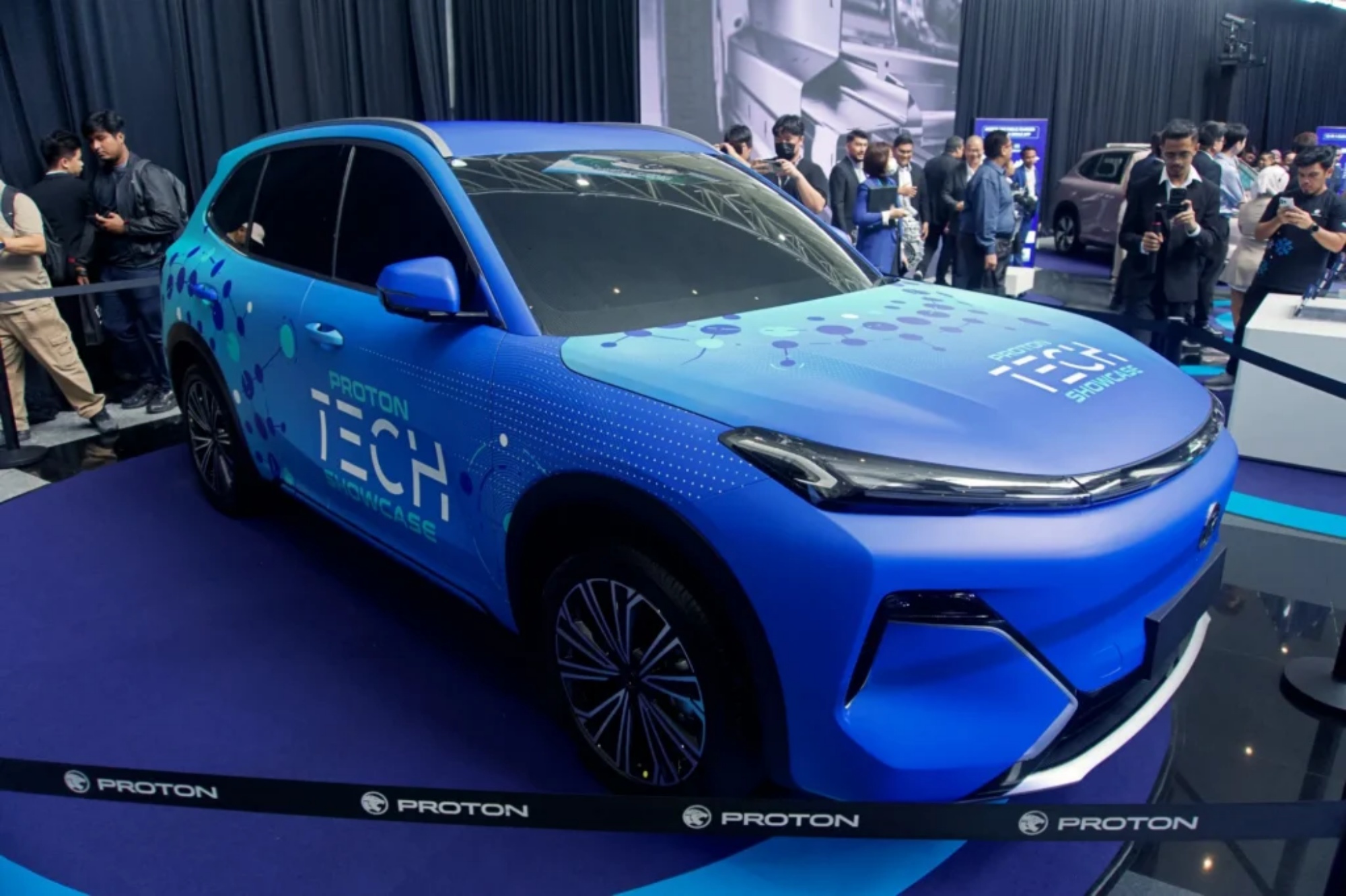
Equipment levels vary by variant. The Prime comes standard with LED headlights and daytime running lights, automatic headlights, LED indicators, roof rails, 18-inch wheels, rain-sensing wipers, and power-adjustable heated side mirrors. Moving up to the Premium adds 19-inch wheels, a front full-width LED light bar, a powered tailgate, and auto-folding mirrors. The range-topping Premium Plus further stands out with a panoramic sunroof and integrated sunshade.
Proton has yet to fully reveal the interior design, but it has confirmed key cabin details. The eMAS 7 PHEV features a 10.2-inch digital instrument cluster and a 15.4-inch central infotainment display running Flyme Auto OS, with support for English and Malay, wireless Android Auto and Apple CarPlay, and over-the-air updates. Standard features include a six-speaker sound system, leatherette upholstery, a multi-function steering wheel, and both Type-A and Type-C USB ports.
The Premium and Premium Plus variants add a larger 13.8-inch head-up display, a 16-speaker Flyme sound system, ventilated and power-adjustable front seats with memory, ambient lighting with 256 colours, a rear centre armrest, a retractable tonneau cover, and a 360-degree surround view camera.
The eMAS 7 PHEV uses a BHE15PFI 1.5-litre naturally aspirated four-cylinder dedicated hybrid engine that produces 99 hp and 125 Nm of torque. Although related to the engine found in the 2026 Proton Saga, this version runs on a different tune and is claimed to achieve a thermal efficiency of up to 46.5%. The engine works together with an 11-in-1 integrated dedicated hybrid transmission (DHT), which enables series-parallel hybrid operation and integrates a traction motor delivering 218 hp and 262 Nm. Combined system output stands at 262 hp.

Battery specifications vary across the range. The Prime and Premium variants use an 18.4 kWh CATL-sourced LFP battery, offering up to 83 km of electric-only driving range on the WLTP cycle, or 105 km on NEDC. These variants also deliver a total combined driving range of up to 943 km (WLTP) and return a claimed fuel consumption of 4.3 litres per 100 km.
At the top of the lineup, the Premium Plus gains a much larger 29.8 kWh Aegis Short Blade LFP battery. This increases the electric-only range to 146 km (WLTP) and extends total combined range to 996 km. Despite the added weight, Proton says efficiency remains competitive at 4.4 litres per 100 km.
Performance figures are broadly similar across the range. The Prime and Premium variants accelerate from 0–100 km/h in 8.0 seconds, while the heavier Premium Plus completes the same sprint in 8.2 seconds. All variants share a top speed of 170 km/h.
Charging-wise, the Prime and Premium variants are capable of 30 kW DC fast charging, enabling a 30–80% charge in under 20 minutes. The Premium Plus ups this to 60 kW DC, reducing the same charging window to under 16 minutes. All versions also support 6.6 kW AC charging, along with Vehicle-to-Load (V2L) and Vehicle-to-Vehicle (V2V) functionality.
In terms of safety equipment, the Prime variant includes seven airbags and a Level 2 ADAS suite with features such as adaptive cruise control, autonomous emergency braking, lane keeping assist, traffic sign recognition, and leading vehicle departure alert. Meanwhile, the two higher variants expand on this with additional systems including blind spot detection, rear cross traffic alert and braking, emergency lane keep assist, and door open warning.
Proton will reveal pricing and other details closer to the launch. The company has also confirmed on its official Facebook page that it will hold a livestream on 13 January 2026 at 6pm, with bookings opening on the same day.
(Source: Paultan.org / Proton eMAS Cars [Facebook])
